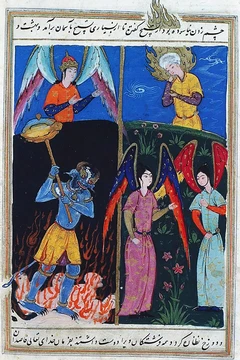
Babalú-Ayé
Oriṣa of Earth, healing, and disease.

Wikipedia / Wikimedia Commons
Babalú-Ayé (from Yoruba Obalúayé; also called Oluaye, Omolu, Ṣọpọna, Ayé in Trinidad Orisha, or Obaluaiye) is one of the Oriṣa or manifestations of the Supreme Deity Olodumare in the Yoruba religion of West Africa. He is a spirit of the Earth and is strongly associated with healing and illness, promoting cures for diseases while also being feared for bringing ailments such as smallpox. Venerated by the Yoruba, Fon, and Ewe peoples, and later in Latin American traditions like Santería and Candomblé, Babalú-Ayé remains a central figure in Afro-diasporic spirituality, symbolizing the dual nature of disease as both punishment and path to restoration.
- field
- Yoruba religion, Afro-diasporic traditions
- known_for
- Spirit of Earth, healing, illness, smallpox
- nationality
- West African (Yoruba, Fon, Ewe)
- also_called
- Ṣọpọna, Sakpata, Asojano, Pata en Llaga
Lore & Background
In Yoruba tradition, Babalú-Ayé is often called Sopona and is said to have dominion over the Earth and smallpox. He demands respect and even gratitude when he claims a victim, earning the praise name Alápa-dúpé, meaning “One who kills and is thanked for it.” One commonly recounted story tells that Ṣopona was old and lame; when he attended a celebration at the palace of Obatala, he stumbled while dancing, and the other orishas laughed. In anger, he tried to infect them with smallpox, but Obatala stopped him and drove him into the bush, where he has lived as an outcast ever since. Among the Fon, the spirit is called Sakpata, owner of the Earth with strong associations with smallpox and infections, and his worship is diverse, with many distinct manifestations. The Ewe venerate a similar figure with the praise name Anyigbato, who wanders at night wearing a garment of rattling snail shells.
Reader's Guide
Babalú-Ayé's significance lies in his embodiment of the permeable boundary between health and illness, life and death. As a spirit who both punishes with disease and rewards with healing, his worship addresses the body as a central locus of human limitation and divine power. His mythical lameness evokes constant physical pain, while his exile and eventual restoration reflect themes of movement, secrecy, and the cyclic nature of life. In the Americas, particularly in Santería, he is syncretized with Saint Lazarus of Bethany and honored with a pilgrimage on December 17 at the Leprosarium-Church of San Lázaro in Havana. His vessels have holes in their lids, symbolizing the difficulty of containing illness, and he is dressed in sackcloth and raffia fringe. Through divination, he speaks via the Ifá signs Ojuani Meyi and Irete Meyi, and in cowrie-shell divination he is associated with Metanlá (13 cowries). His genealogical relationships are disputed: some consider him son of Yemoja and brother of Shango, others son or husband of Nana Buluku, with myths in Candomblé portraying Nana Burukú as his true mother who abandoned him, after which Yemoja nursed him back to health.
Did You Know?
- Babalú-Ayé is also known as Ṣọpọna, meaning he brings smallpox.
- His praise name Alápa-dúpé means 'One who kills and is thanked for it.'
- In Santería, he is syncretized with Saint Lazarus the beggar from the parable and honored on December 17.
- His vessels have holes in their lids to symbolize the difficulty of containing illness.
Frequently Asked Questions
Who is Babalú-Ayé?
Babalú-Ayé is a Yoruba Orisha — a manifestation of the Supreme Deity Olodumare — who governs the Earth and is deeply tied to both sickness and its cure. He is venerated across West Africa and throughout the Afro-diasporic world, particularly in Santería and Candomblé.
What are Babalú-Ayé's powers and role?
He is the Orisha of the Earth, healing, and disease, most famously linked to smallpox. His dual nature means he can both inflict ailments and grant cures, making him a figure of both fear and desperate hope among his devotees.
What are Babalú-Ayé's other names?
He goes by several names depending on the tradition, including Omolu, Ṣọpọna, Sakpata, Asojano, and Pata en Llaga. In Trinidad Orisha practice he is also known simply as Ayé, while the Fon and Ewe traditions refer to him as Sakpata.
Why is Babalú-Ayé important in Afro-diasporic spirituality?
He embodies the inseparable link between suffering and recovery, representing the idea that illness and healing are two faces of the same Earth force. His centrality in Yoruba, Fon, Ewe, Santería, and Candomblé traditions makes him a cornerstone of Afro-diasporic worship.
How is Babalú-Ayé venerated in practice?
Devotees offer prayers, libations, and ritual observances to seek his protection from disease or to request a cure. His worship spans West African communities and Latin American diaspora traditions, where he remains one of the most widely invoked Orishas.
More in part-1
Spotted an error? Know more?
This is a living reference — every entry is fact-audited, and reader corrections feed straight into our audit queue. Suggest an edit · See this site's audit record