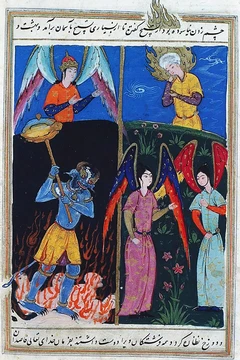
Fælværa
Ossetian deity protector of sheep and cattle.

Wikipedia / Wikimedia Commons
Fælværa (also known as Falvara) is a deity in Ossetian mythology, recognized as the protector of sheep and cattle. He is identified with the hunting deity Æfsati and is noted for his rivalry with Tutyr, the lord of wolves. His name is believed by scholars such as Vsevolod Miller, Vasily Abaev, and Georges Dumézil to derive from the Greek names of Saints Florus and Laurus.
- field
- Ossetian mythology
- nationality
- Ossetian
- known_for
- Protector of sheep and cattle; associated with a ram; proverbial for humility and meekness
Lore & Background
Fælværa is depicted in the Nart saga as a celestial being who participates in Nart feasts and is often called kind and generous. He is described as a man missing his left eye, knocked out by Tutyr to allow wolves to approach sheep unnoticed. In one tale, he distributes cattle as a sacrifice among the celestials; in another, he endows the Digorians with sheep, goats, and horses. However, when the supreme god Hytsau decided to punish the Narts, Fælværa served as a conductor of his wrath, sending a pestilence on their cattle from heaven.
Reader's Guide
Fælværa holds a significant place in Ossetian mythology as a pastoral deity whose good-heartedness became proverbial: Ossetians would say 'He looks like Fælværa' to praise someone's humility and meekness, a saying that has survived to the present day. His ritual embodiment as a ram is documented in ethnographic research, where a boiled ram's head and other parts were placed before elders during a holiday in August, symbolizing his presence. Despite his generally benevolent nature, he could also act as an agent of divine punishment, as seen in the Nart saga. His high status is reflected in his role as an honorary matchmaker for Atsamaz and Agunda, alongside other major deities, though he was considered the youngest among them. His seat was Mount Kariu in the Kurtatin gorge of North Ossetia. One of the earliest references to Fælværa appears in an 1870 article in the newspaper 'Terskiye Vedomosti', where he is called the 'god of cattle' represented as a ram and asked to increase livestock and grant children to women.
Did You Know?
- Fælværa's name is believed by scholars to derive from the Greek names of Saints Florus and Laurus.
- He is depicted as a man missing his left eye, knocked out by the wolf deity Tutyr.
- A boiled ram's head, back, leg, and tail fat were placed before elders during his August holiday as a symbol of his presence.
- Ossetians used the phrase 'He looks like Fælværa' to praise someone's humility and meekness.
More in part-1
Spotted an error? Know more?
This is a living reference — every entry is fact-audited, and reader corrections feed straight into our audit queue. Suggest an edit · See this site's audit record