Ossetian mythology
Ossetian mythology blends Scythian roots with Christian saints.
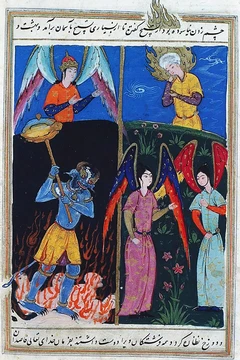
Ossetian mythology, also known as Alan mythology, is the collective term for the beliefs and practices of the Ossetian people of the Caucasus region. It contains several gods and supernatural beings, is believed to be of Scythian origin, and includes many later elements from Christianity, with Ossetian gods often identified with Christian saints. The gods play a role in the famous stories about a race of semi-divine heroes called the Narts.
- field
- Mythology
- nationality
- Ossetian (Caucasus region)
- known_for
- Beliefs and practices of the Ossetian people, including deities such as Hutsau, Uastyrdzhi, and Uacilla, and the Nart sagas
- origin
- Scythian origin with later Christian elements
Lore & Background
The chief of the gods is Hutsau (Xucau). Uastyrdzhi (Wasgergi), named after Saint George, is the patron of males and travellers and the guarantor of oaths, and is the main patron of North Ossetia–Alania. Uacilla (Watsilla), named after Saint Elijah, is the god of rain, thunder and lightning, and protector of the harvest; anyone struck by lightning was considered chosen by the god. Safa is the god of the hearth chain, the most important domestic deity. Donbettyr, lord of the waters, is named after Saint Peter and uses his chain to drag down unwary swimmers. His daughter Dzerassae is the mother of many Nart heroes. Tutyr, named after Saint Theodore of Tyre, is lord of the wolves. Fælværa, protector of sheep, has only one eye and is often the enemy of Tutyr. Æfsati, possibly named after Saint Eustace, is a male hunting god. Kurdalægon is the heavenly smith and a close friend of the Narts. Satana is the mother goddess and mother of the Narts. Saubarag is the god of darkness and thieves. Huyændon Ældar is lord of the fish and a great magician. Barastyr is the psychopomp and ruler of the underworld. Aminon is gatekeeper of the underworld. Alardy is lord of smallpox, who had to be placated.
Reader's Guide
Ossetian mythology is significant as a surviving tradition that preserves elements of ancient Scythian religion while incorporating Christian saints, reflecting the historical and cultural interactions in the Caucasus. The mythology is central to the Nart sagas, a cycle of stories about semi-divine heroes that are a key part of Ossetian folklore. The deities often have dual identities, such as Uastyrdzhi being both a native god and identified with Saint George, illustrating syncretism. The mythology also includes unique concepts like the dream journey to the land of the dead, where certain individuals (Kurysdzauta/Burkudzauta) can visit the meadow Kurys in their sleep and bring back seeds of luck or sickness. The uac- prefix in names like Uastyrdzhi and Uacilla is understood to mean 'saint,' though the synchronic term for saint is syhdaeg. The legacy of Ossetian mythology lies in its continued cultural relevance and its role in understanding the religious history of the Caucasus and the ancient Scythians.
Did You Know?
- The uac- prefix in Uastyrdzhi and Uacilla has no synchronic meaning in Ossetic and is usually understood to mean 'saint'.
- Anyone struck by lightning was considered chosen by the god Uacilla, and if they survived, a sheep was sacrificed in their honor.
- Donbettyr, lord of the waters, uses his chain to drag down those who go swimming too late to his realm at the bottom of the sea.
- The dream land Kurys can be visited by certain shaman-like individuals (Kurysdzauta/Burkudzauta) in their sleep, who may bring back miraculous seeds of luck or fever.
More in part-1
Spotted an error? Know more?
This is a living reference — every entry is fact-audited, and reader corrections feed straight into our audit queue. Suggest an edit · See this site's audit record